
Marble has remained the gold standard in bathroom design for centuries, and for good reason. Its natural veining, cool-to-touch surface, and timeless elegance bring an air of luxury to even modest bathrooms. Whether you’re planning a full renovation or targeting specific upgrades, marble offers versatility that works with contemporary minimalist spaces, traditional layouts, and everything in between. The challenge isn’t finding marble that looks good: it’s choosing the right application, color palette, and installation method for your lifestyle and budget. This guide walks you through the practical essentials of bathroom marble design, from material selection to maintenance strategies, so you can make informed decisions and avoid costly mistakes.
Table of Contents
ToggleKey Takeaways
- Bathroom marble design delivers timeless luxury and unique character, but requires proper sealing and immediate spill cleanup to prevent etching and water damage.
- Carrara and Calacatta marbles are the most popular choices for modern bathrooms, with costs ranging from $3–$10+ per square foot depending on quality and veining intensity.
- Marble works best as accent features (vanity countertops, walls, or feature walls) rather than high-traffic flooring, which demands professional installation and strategic finishing to prevent slipping.
- Marble-look porcelain tile offers a budget-friendly alternative at 1/3 the cost with zero maintenance drawbacks, making it ideal if durability and ease of care are priorities.
- Proper maintenance—including sealing every 6–12 months and using only pH-neutral cleaners—is essential to keep marble bathrooms looking premium for decades and avoid costly damage.
Why Marble Is the Ultimate Bathroom Choice
Marble works in bathrooms because it handles moisture naturally, when sealed properly, it resists water penetration far better than many alternatives. The stone’s non-porous surface (after sealing) makes it easier to clean than some porous materials, and it stays cool underfoot, a bonus if you prefer that feeling on bare feet in the morning.
The aesthetic appeal is undeniable. Each slab is unique: veining patterns mean your bathroom won’t look mass-produced. Marble also ages gracefully, minor etching from acidic products or hard water actually adds character, creating a lived-in patina that many designers intentionally seek.
That said, marble demands respect. It’s softer than granite or quartz, so it chips more easily. Acidic cleaners and spills (citrus, vinegar, wine) can etch the surface if not wiped immediately. Budget-conscious DIYers should understand these trade-offs upfront: marble rewards careful maintenance but punishes neglect. If your household is chaotic and spills happen daily, you might want to consider alternatives or limit marble to accent areas rather than high-traffic flooring.
Popular Marble Colors and Patterns for Modern Bathrooms
Classic White and Gray Marble
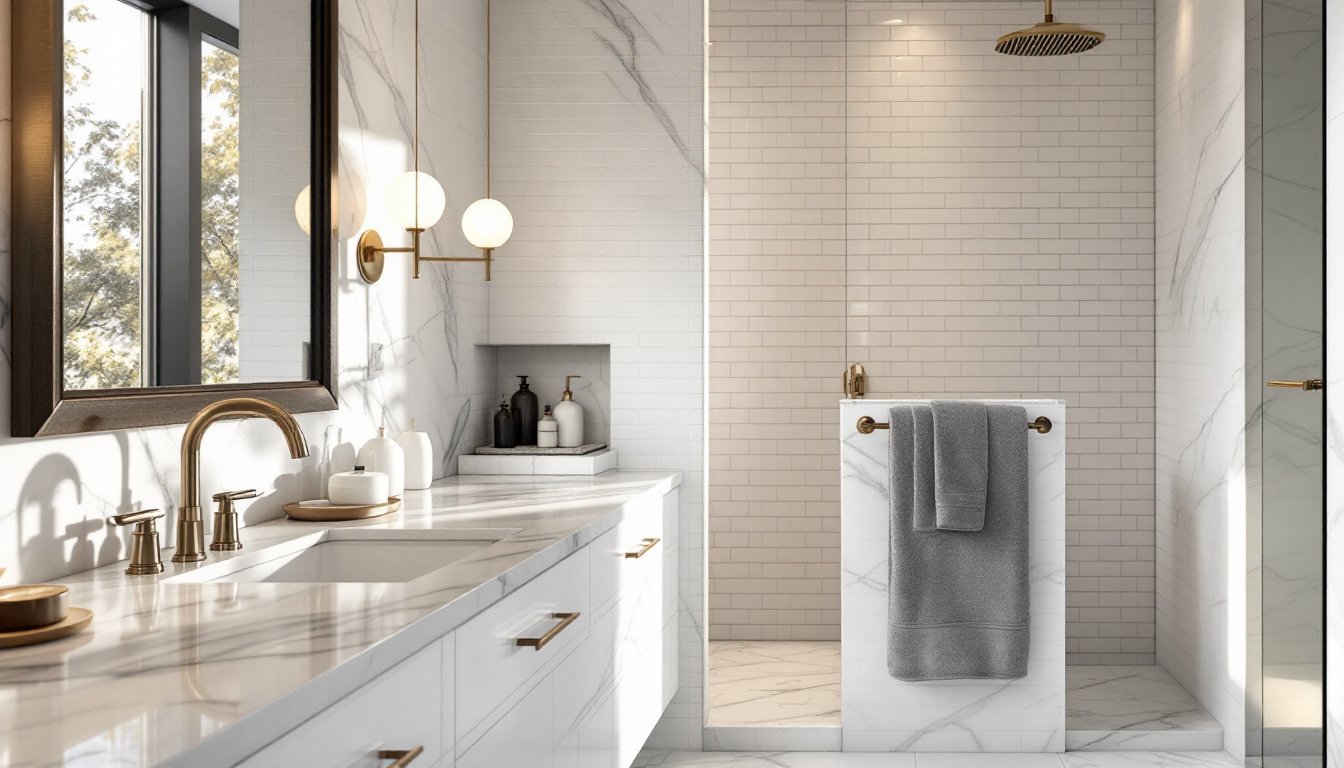
Calacatta and Carrara are the heavyweights here. Carrara marble features soft gray veining on a white or light gray base and is widely available and relatively affordable, typically $3–$7 per square foot for raw material. Calacatta is bolder: thicker, more dramatic veining in gray, gold, or brown tones. Expect to pay $4–$10+ per square foot, and sourcing can take longer.
White marble suits minimalist bathrooms and creates the illusion of more space. Gray veining adds visual interest without overwhelming a small bathroom. These classic colors pair effortlessly with chrome or brushed-nickel fixtures, white subway tile, and natural wood accents.
Bold Statement Marbles
Black marble (like Nero Marquina) commands attention as a feature wall or flooring accent. Pairing it with white grout and minimal fixtures keeps the look sophisticated rather than funereal. Verde Antique introduces green tones, striking but demands careful color coordination in cabinetry and accessories.
Statement marbles cost more ($8–$15+ per square foot) and require confident design choices. If you’re uncertain, test samples in your actual bathroom lighting before committing. Sunlight and artificial light change marble’s appearance dramatically. Browsing marble tile bathroom where you can see how specific colors perform in different lighting conditions.
Marble Applications: Walls, Floors, and Accents
Marble flooring is the most dramatic application but also the most demanding. 12×12 or 18×18 inch tiles are standard for bathrooms: larger format tiles reduce grout lines and visual clutter. Thinner polished marble can feel slippery when wet, hone or bush-hammer the finish for grip, or use mats strategically. Floor installation requires a stable substrate (concrete or properly installed cement backer board), waterproofing membrane below, thin-set mortar, and sealed grout. This isn’t a beginner’s DIY project unless you have tile experience: a professional installation ensures proper slope for drainage and prevents water damage beneath.
Marble walls and shower surrounds are more forgiving. Subway tile layout (4×8 or 3×6 inch tiles) is classic and hides imperfections better than larger formats. A feature wall behind the vanity creates impact without the maintenance burden of marble flooring. Shower walls need waterproofing: use cement backer board (not drywall), a waterproofing membrane, and sealed grout or urethane caulk in corners. Budget $400–$800 for materials and labor if hiring a pro for a standard 5×8 foot shower surround.
Accents and trim are where budget-conscious DIYers shine. A marble vanity countertop, window sill, or accent shelf delivers luxury without the logistical headache of large-scale installation. Marble pieces can be sealed at home using a penetrating sealer (applied in thin coats, 2–3 typically). Countertops take more abuse than walls but less than floors, making them a practical sweet spot.
Budget-Friendly Marble Alternatives and Tips
If marble’s price tag feels steep, consider marble-look porcelain tile. Modern digital printing makes porcelain nearly indistinguishable from real marble at 1/3 the cost and with zero maintenance drawbacks. Brands produce convincing Calacatta and Carrara reproductions at $1.50–$4 per square foot. The trade-off: porcelain lacks marble’s organic depth and slight translucency, but for most bathrooms, the savings and durability win.
Honed limestone mimics marble’s appearance and softness, costs slightly less, and handles moisture well when sealed. Engineered marble (resin-bound stone chips) is man-made and extremely durable, though some purists avoid it for aesthetic reasons.
If real marble is non-negotiable, stretch your budget by:
- Using marble as accent only: A 3-foot section of marble wall behind the sink costs $200–$400 in material and labor, versus $1,500+ for a full surround.
- Buying salvage or remnants: Architectural salvage shops and stone yards sell leftover slabs at deep discounts, perfect for smaller projects.
- Mixing materials: Marble tile on walls paired with porcelain on the floor, or vice versa, balances aesthetics and cost.
- Installing yourself (walls only): Wall tile requires less precision than flooring. With cement board, thin-set, and grout, an experienced DIYer can save $300–$600 in labor on a small project.
Design inspiration from curated home product guides can help identify where marble adds the most visual impact relative to cost.
Maintenance and Care for Lasting Beauty
Sealing is non-negotiable. New marble must be sealed within 48 hours of installation, use a penetrating sealer (not a topical one, which creates a plastic-looking sheen). Reapply every 6–12 months depending on bathroom humidity and use. A $15–$30 bottle covers 100–200 square feet and takes 10 minutes to apply.
Daily care is straightforward: wipe spills immediately, use pH-neutral cleaner (avoid vinegar, lemon, or acidic bathroom sprays), and dry the surface after cleaning. The goal is preventing prolonged contact between marble and acidic substances. Etching (light dull spots where acid has removed the polished finish) is cosmetic but accumulates over time.
For minor etching, marble polishing compounds or a professional honing service can restore shine. Chips in visible areas can be repaired with color-matched epoxy or by a stone repair specialist. Deep gouges or large damage typically require replacement of that tile or section, yet another reason to buy extra material during installation.
Avoid:
- Abrasive scrubbers or scouring powders
- Bleach or harsh bathroom cleaners
- Vinegar or citrus-based products
- Sitting toiletries (bottles, soaps, shampoo) directly on marble: use trays or dishes
Luxury home design trends consistently feature marble in high-end bathrooms precisely because when properly maintained, it looks premium for decades. Commitment to care separates stunning marble bathrooms from regretted decisions.