
When floor space is tight, stairs can feel like a wasted opportunity, or a chance to get creative. Smart small space stairs design transforms those steps from a square-footage burden into functional art. Whether you’re working with a cramped apartment, a tiny home, or a tight floor plan, the right stair strategy opens up possibilities. This guide walks through seven proven approaches, from floating designs to under-stair storage, that make compact layouts feel bigger while keeping safety and style in check.
Table of Contents
ToggleKey Takeaways
- Small space stairs design transforms compact layouts from a visual burden into a functional asset that makes rooms feel larger and brighter.
- Floating stairs eliminate bulky supporting structures, allowing light and sightlines to pass through while regaining floor area below for an estimated cost of $3,000–$8,000 installed.
- Built-in storage under stairs reclaims wasted triangle space for drawers, shelving, and hidden compartments at a DIY cost of just $200–$800, delivering one of the highest ROI upgrades in small homes.
- Spiral and curved stairs compress vertical rise into minimal horizontal footprint, with spiral models requiring only about 5 feet of circular floor space compared to 10+ feet for conventional stairs.
- Light-colored treads, open risers, thin metal railings, and glass panels maintain sightlines and visual airiness better than dark, solid, or closed stair designs in tight quarters.
- Strategic lighting (LED strips, sconces, recessed lights) and minimalist railings enhance safety without blocking views, costing $30–$200 per fixture in materials.
Why Stairs Matter in Compact Homes
In a limited space home, every inch counts. Stairs are either a visual barrier that closes off areas or an intelligent design feature that opens them up. The wrong stair design crowds a room, breaks sightlines, and eats precious square footage without adding value. The right one breathes.
When stairs are bulky or opaque, they fragment a small floor plan into isolated corners. Vertical circulation becomes dead weight. But when designed thoughtfully, with open treads, minimal footprint, or creative dual-purpose use, stairs become an asset. They handle the essential job of moving between levels while freeing up the rest of the space to feel larger, brighter, and more livable.
This is why small space planning always starts with the stairs. They’re often non-negotiable structurally, so getting their design right ripples through the entire home. A floating staircase doesn’t just look modern: it literally lets light and sightlines pass through. Under-stair storage turns wasted triangle space into functional square footage. Smart material and color choices make steps recede visually rather than dominate. That’s the mindset: work with the constraint, not against it.
Floating Stairs: Space-Saving Style and Open Feel
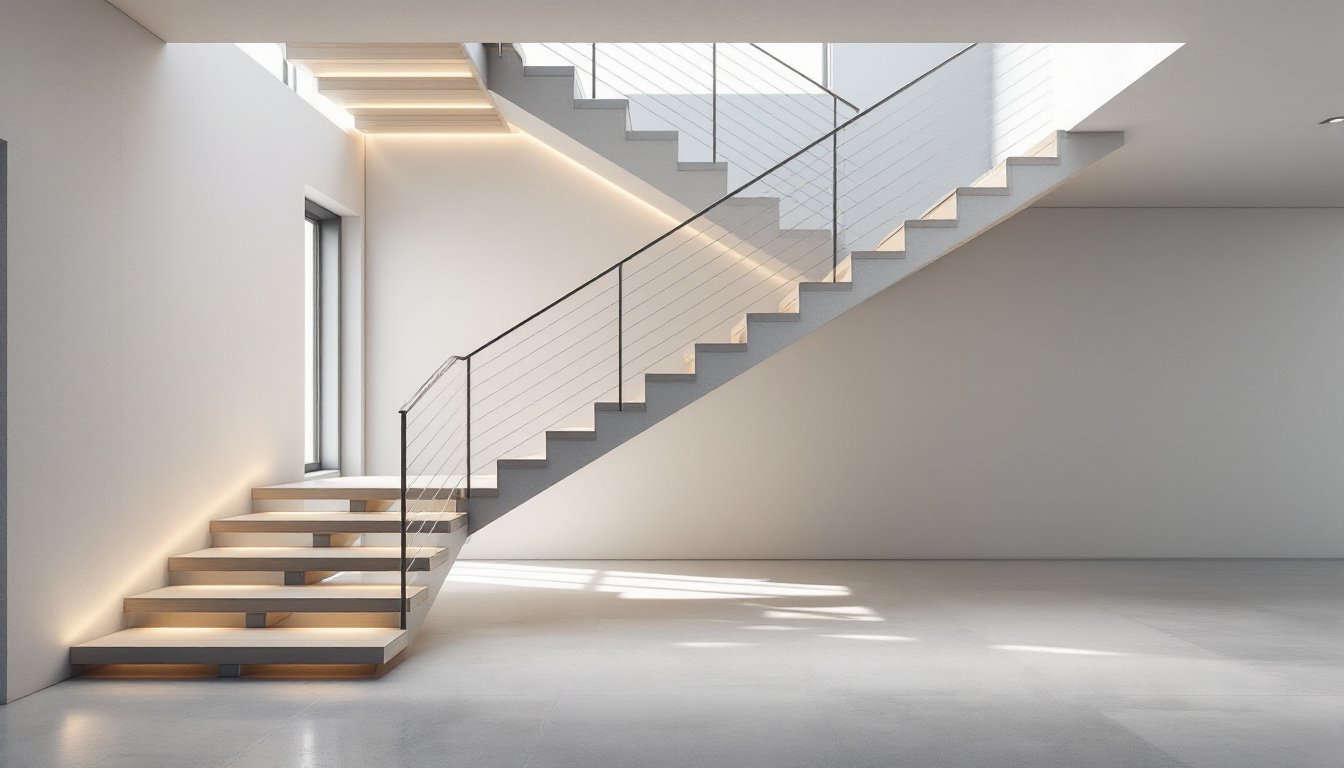
Floating or cantilevered stairs are the gold standard for limited space because they eliminate the bulky supporting structure underneath. Instead of a solid box frame or stringers running the full length, floating stairs are anchored to the wall on one side and supported by a steel or concrete spine beam bolted into wall studs (usually 2×10 or larger, doubled up).
The visual payoff is huge: you see right through to the space beneath, which feels larger instantly. Light travels freely. The overall footprint shrinks because there’s no bulk underneath consuming floor area.
Construction-wise, floating stairs are not a beginner DIY project. This is structural work requiring an engineer’s plan and likely a permit. Loads matter, each step cantilevers outward, concentrating weight on that wall anchor. You’ll need a builder or carpenter experienced with steel reinforcement. But, the result is worth it for serious space gains and a modern aesthetic that never looks cramped.
For a mid-range budget, a floating staircase in wood or engineered wood with steel support runs $3,000–$8,000 installed, depending on height and finish. Custom metal stairs push higher. The payback is both functional and visual: regained floor space below and a sleeker home silhouette.
Spiral and Curved Stairs for Tight Layouts
When floor footprint is the enemy, spiral and curved stairs compress vertical rise into a small horizontal footprint. A standard spiral staircase needs only about 5 feet of circular floor space, a fraction of the 3 feet wide by 10+ feet long a conventional straight staircase demands.
Spiral stairs work best for lofts, attics, or secondary access to compact upper floors. They demand more physical effort to climb (narrower treads, tighter spiral) and won’t suit elderly or mobility-challenged residents. Children and pets also struggle with spiral geometry. That said, for a tight layout where a secondary or decorative stair makes sense, a spiral is hard to beat for pure space savings.
Curved stairs occupy a middle ground: slightly wider treads than spirals, gentler radius, easier to climb. They hug perimeter walls and create an architectural focal point rather than feeling cramped. Curved stairs integrate seamlessly with modern or traditional design.
Both options come prefabricated (metal spiral kits from hardware suppliers run $800–$2,500) or custom-built (curved stairs, $4,000–$10,000+). DIYers can assemble a kit spiral if installation steps are clear, but curved stairs usually need professional framing. Check local building codes for tread depth, rise height, and handrail requirements, spiral stairs have specific restrictions because they’re riskier to navigate.
Built-In Storage Under Stairs: Dual-Purpose Design
The space under stairs is often wasted. In a small space, that’s unforgivable. Built-in storage reclaims this triangle, and it’s one of the most practical DIY projects for any staircase.
The footprint under stairs naturally slopes: full height at the stairwell edge, tapering to nothing near the far corner. This awkward geometry is perfect for custom storage because the depth varies. Rather than fighting it, embrace it.
Drawers, Shelving, and Hidden Compartments
Drawers work best near the full-height section. Standard drawer slides handle 80–100 pounds, so they’re ideal for shoes, seasonal items, or light gear. Measure your opening carefully: the apron (vertical face) determines drawer height, and the sloped underside of stairs sets depth. Most under-stair drawers end up 12–18 inches deep, perfect for most items.
Shelving works anywhere along the slope. Fixed shelves built into the frame create a cleaner look than floating shelves, but floating shelves are simpler if you’re retrofitting. Use 3/4-inch plywood, brad 2×4 support cleats to the wall studs, and secure shelves with L-brackets rated for your load. A typical shelf runs $30–$60 in materials if DIY.
Hidden compartments add function and intrigue. A hinged panel front, magnetic catches, and a small interior shelf create a discreet storage zone for valuables, off-season items, or pet supplies. This takes basic carpentry (cutting plywood, hanging a panel on piano hinges, installing catches) but no special skills.
Total cost for under-stair storage: $200–$800 DIY (materials only), depending on complexity. Hire a carpenter if framework modifications are needed: $1,500–$3,500 for a finished installation. This is one of the highest ROI upgrades in a small home because it adds usable square footage while tightening the overall design.
Material and Color Choices That Enhance Small Spaces
Material and color decisions ripple through the entire visual impression of a small space. Stairs that are heavy and dark visually “close” a room. Stairs that are light and minimal feel airy.
Light-colored treads (white, pale gray, honey wood) reflect light and make stairs feel less solid. Dark wood can work, but pair it with open risers (no vertical face between steps) so light passes through. Avoid closed, solid-colored risers in dark tones, they read as heavy blocks.
Open or floating treads are better than closed because you can see through them. If full openness isn’t possible (safety with pets or kids), thin metal railings or glass panels maintain sightlines without the visual weight of solid balusters.
Material matters too. Tile or engineered wood treads are durable and easy to clean, ideal for main stairs. Carpet softens acoustic impact and adds warmth but absorbs visual space (choose light neutrals or gentle patterns). Steel and glass read modern and minimal: wood feels warm and traditional. Match your choice to the surrounding decor.
Color continuity also helps: if walls are light, carry that through to stair color. A dramatic accent stair (deep blue or charcoal) can work as a design anchor in an open plan, but it’s a bolder move in tight quarters. When in doubt, lighter and simpler reads bigger. Many professional designers use stairs as a neutral pass-through, reserving visual weight for walls, railings, or lighting instead.
Lighting and Railings: Safety Without Blocking Views
Railings and lighting are non-negotiable safety features, but they can also close off a small space visually. The trick is choosing designs that protect without blocking sightlines.
Railings: Code requires a 36-inch-high handrail and balusters (vertical spindles) spaced no more than 4 inches apart to prevent head entrapment. In a small space, metal railings (steel or aluminum) beat wood because they’re visually lighter. Horizontal steel cables strung through minimalist frame posts create an industrial look while letting eyes travel right through. Glass panel railings are pricier ($50–$150 per linear foot installed) but create an almost invisible boundary. Solid wood railings, while warm and traditional, feel heavier, save them for homes with more breathing room.
Lighting: Well-placed lights guide safely and create visual interest. Under-stair accent lighting (LED strips mounted on the underside of treads) illuminates the landing below while adding a modern touch. Wall-mounted sconces at mid-landing draw focus upward. Recessed lights in a soffit above treads avoid adding visible fixtures that clutter the space. All of these cost $30–$200 per fixture in materials: installation depends on existing wiring.
Build both features into your stair project from the start. Retrofitting railings or running electrical later is messier and costlier. If budget is tight, a simple metal handrail and basic spindles meet code and feel minimalist. You can always upgrade finishes or add accent lighting later.
Bringing It All Together
Small space stairs don’t have to feel cramped or compromised. Young House Love and Apartment Therapy both showcase examples where creative stair design anchors entire renovations. From floating cantilevers that reclaim floor area to spiral stairs that compress footprint, the options are real, and they work.
The key is deciding early: Is your priority visual openness (floating or open-tread stairs), storage reclamation (under-stair built-ins), or footprint efficiency (spiral)? Then layer in thoughtful material, color, lighting, and railing choices that enhance rather than diminish the space. A well-designed staircase in a small home doesn’t just move you between levels: it sets the tone for the entire home. Make it count.