
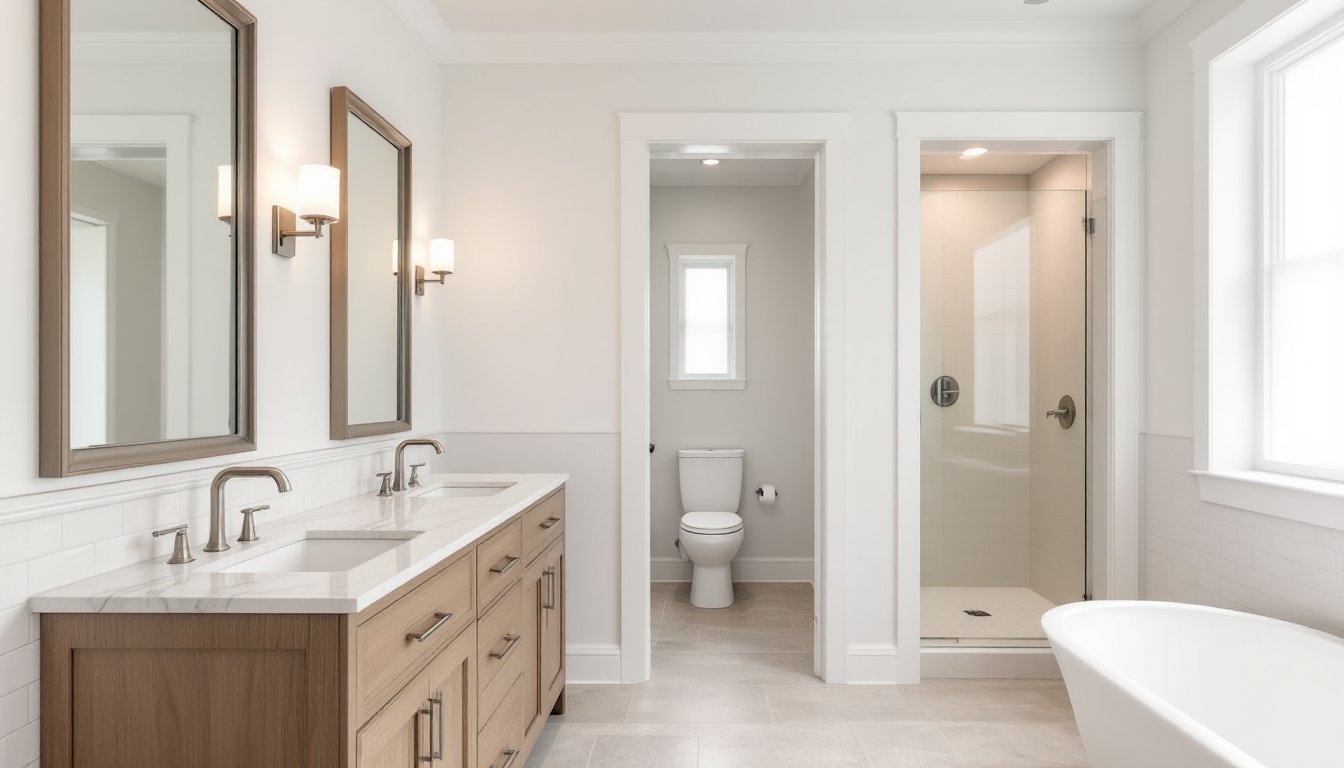
A bathroom remodel is one of the highest-return home improvements, but only if it lasts. Slap a trendy tile pattern on the wall, and in five years you’ll be staring at yesterday’s look. The better path is timeless bathroom design: choices that feel both current and classic, functional and elegant, without needing an overhaul every few seasons. This guide breaks down the real elements that stand the test of time, from color to materials to layout, so your bathroom looks good whether you’re selling in 2026 or still enjoying it in 2035.
Table of Contents
ToggleKey Takeaways
- Timeless bathroom design leverages neutral foundations, quality materials, and restrained finishes to create spaces that remain elegant and functional for decades without costly trendy overhauls.
- Classic color palettes like warm whites, soft grays, and creams provide a durable canvas; reserve bolder tones like muted greens or warm ochres for small accents you can easily refresh.
- Invest in durable, quality materials—ceramic or porcelain tile, solid wood vanities, and brushed nickel or bronze fixtures—because cheap materials fail fast in high-moisture bathroom environments.
- Simple, clean-lined fixtures with neutral finishes (elongated toilets, frameless glass showers, pedestal sinks) age better than ornate or ultra-geometric designs that feel dated within a decade.
- Functional layout and adequate storage transform a bathroom from beautiful to livable; position fixtures for ease of use, include genuine closed cabinetry, and install proper ventilation to preserve finishes and materials.
- A modern timeless bathroom design balances contemporary comfort with visual restraint, using layered task and ambient lighting, thoughtful proportions, and quality proportions that feel intentional rather than accidental.
Why Timeless Design Matters For Your Bathroom
Trend-driven bathrooms cost money twice: once during installation, and again when they feel dated and you want them redone. Timeless design isn’t about avoiding any personality, it’s about building on elements that age gracefully rather than garishly.
A classic bathroom design rests on restraint and quality. When you choose solid materials, thoughtful proportions, and a restrained color story, you create a space that looks intentional, not accidental. Your bathroom stays contemporary because it never screams “2020s” or “2010s” in the first place.
Beyond resale value, living with a bathroom that doesn’t exhaust you visually is worth something too. You spend real time there. A modern timeless bathroom design balances contemporary comfort, heated floors, soft-close drawers, efficient ventilation, with visual calm. That’s a space that works for you, not against you, year after year.
Classic Color Palettes That Endure
Color is the cheapest way to make a bathroom feel dated. Spa teals, navy-and-white stripes, and blush pink accents all screamed “now” at one point, and now they whisper “then.”
Timeless color in bathrooms stays quiet. That doesn’t mean boring. It means leveraging a palette that’s been working for decades without calling attention to itself.
Neutral Foundations With Staying Power
The backbone of any lasting bathroom is a neutral base: whites, warm grays, soft taupes, or pale creams. These aren’t exciting, but they’re not supposed to be. They’re a canvas.
White subway tile, for instance, has been the standard since the early 1900s, and it’s still everywhere in high-end bathroom design because it works. It’s cleanable, reflects light, and pairs with almost everything. If pure white feels sterile, warm white (with slight gray or cream undertones) softens the effect without looking trendy.
Grays deserve a closer look. Cool grays can feel cold: warm grays, those with brown or taupe undertones, feel grounded. A modern timeless bathroom often uses a warm gray for larger surfaces (walls, floor) and whites or creams for trim and fixtures, creating visual breathing room without contrast that shouts.
Here’s the practical rule: if you’re uncertain about a color, it’s probably too bold for the walls or floor. Reserve stronger tones, soft blacks, warm ochres, muted greens, for accents like a single feature wall or a small tile pattern, which you can refresh without a full remodel. A classic bathroom design in a neutral palette means repainting is an afternoon job, not a nightmare.
Quality Materials And Finishes
Cheap materials fail fast and age worse. Builders’ grade vinyl flooring cracks and peels. Budget fixtures corrode. Budget paint flakes. In a bathroom, where moisture, temperature swings, and daily wear are relentless, cutting costs on materials is false economy.
Investing In Durable, Elegant Surfaces
Choose materials that improve (or at least hold) with age. Marble, granite, and high-quality ceramic tile do. Solid wood vanities sealed properly do. Polished chrome and brushed nickel fixtures hold their finish: cheap plated finishes tarnish and chip.
For flooring, ceramic or porcelain tile is the timeless choice, durable, cleanable, and available in colors and finishes that don’t date. Large-format tiles (12×24 inches or larger) feel more contemporary than small subway pieces, but smaller tiles are equally timeless: the trick is honest layout and good grout. A medium or darker grout color hides wear better than white grout in a high-traffic bathroom.
Wall surfaces in a classic bathroom design work best when they’re either all-tile, painted drywall with a semi-gloss or satin finish (better for moisture), or a combination, tile to a dado or wainscot height, painted walls above. Wallpaper in a bathroom is risky: moisture pushes it away from walls, and trends in patterns age fast. If you want pattern, use a single feature wall of small-scale tiles or a subtle texture, not trendy prints.
For the vanity and cabinetry, solid wood (maple, oak, or cherry) finished with a durable lacquer or conversion varnish lasts decades. A trend-proof bathroom remodel in Brooklyn exemplifies this: quality materials chosen first, trend-resistant finishes applied second. Laminate and particleboard swell and fail when exposed to bathroom humidity: the vanity is one place skimping hurts fast.
Fixture finishes matter too. Brushed nickel and oil-rubbed bronze are contemporary classics. Polished chrome reads as modern or retro depending on the fixture design. Gold and brass accents are current, but they’re also returning to popularity every 20-30 years, so they’re durable trends. The key is committing: if you choose brass faucets, use brass for all metal hardware. Mixing too many finishes dates faster than picking one and sticking with it.
Fixture Styles That Stand The Test Of Time
Bathroom fixtures are both functional and design-forward, which creates a temptation to trend-chase. Resist it.
A simple, clean-lined faucet in a neutral finish, a single-handle or a modest two-handle design, will look appropriate in 2026 and 2036. Ornate crystal knobs, waterfall spouts, or ultra-geometric bodies tend to feel dated once the trend cycle moves on. The best fixtures are elegant through restraint: good proportions, honest materials, minimal fuss.
For the toilet, a standard white elongated bowl is the baseline. Elongated seats are more comfortable and practical than round bowls. If you want a touch of refinement, a toilet with a sleek profile and minimal detailing feels more contemporary than heavily styled models, but either works if it’s quality and clean-lined.
Shower enclosures benefit from simplicity too. Frameless glass is modern and timeless: a simple metal frame in black or brushed nickel is also durable. Ornate frames and designs age faster. A walk-in shower with a linear drain and subtle slope reads as contemporary without looking trendy, while a curved glass enclosure or elaborate tilework in the shower can feel dated within a decade.
Sinks are another design anchor. A classic pedestal sink is timeless: a clean-lined rectangular or oval drop-in sink is equally durable. Avoid heavily ornate pedestals or sinks with decorative aprons unless they match your overall style firmly. For a modern timeless bathroom design, less fussy is always safer. A solid-surface or ceramic basin in white or a warm tone pairs with nearly any vanity or wall color and lasts indefinitely if you avoid abrasive cleaners.
Layout And Functionality Principles
A beautiful bathroom that doesn’t work is a beautiful mistake. Timeless design is also smart design: layout that serves you practically.
Start with the basics: toilet, sink, and shower or tub positioned for ease of use and efficient plumbing. A toilet should never face the bathroom door (code in many jurisdictions). Sinks and mirrors should be well-lit and at a height suited to the household’s typical users. If you’re doing a renovation, resist the urge to move plumbing unless you must: it multiplies costs and complications.
Storage is where bathrooms fail fastest. Shallow shelves, tiny medicine cabinets, and no counter space create clutter, which ages any bathroom instantly. Good timeless design includes genuine storage: deep drawers, closed cabinetry, and a reasonable vanity depth (18-24 inches is standard). Open shelving can work if you’re disciplined, but most households benefit from closed storage, both practical and visually calm.
Lighting sets the tone. A single overhead fixture is not enough. Pair overhead ambient lighting with task lighting at the mirror (wall sconces flanking the mirror, or a horizontal strip above it). Dimmers give flexibility: bright light for grooming, softer light for soaking. Avoid overly decorative fixtures: a simple metal or ceramic trim ring in a finish that matches your faucets creates cohesion without calling attention.
Ventilation is non-negotiable. A bathroom without adequate exhaust will develop mold, mildew, and moisture damage that destroys finishes and materials. Install a properly-sized exhaust fan (capacity matched to room square footage and local code) and use it. It’s invisible to visitors but essential to longevity. A modern timeless bathroom design balances beauty with infrastructure, and ventilation is infrastructure that pays dividends for years.