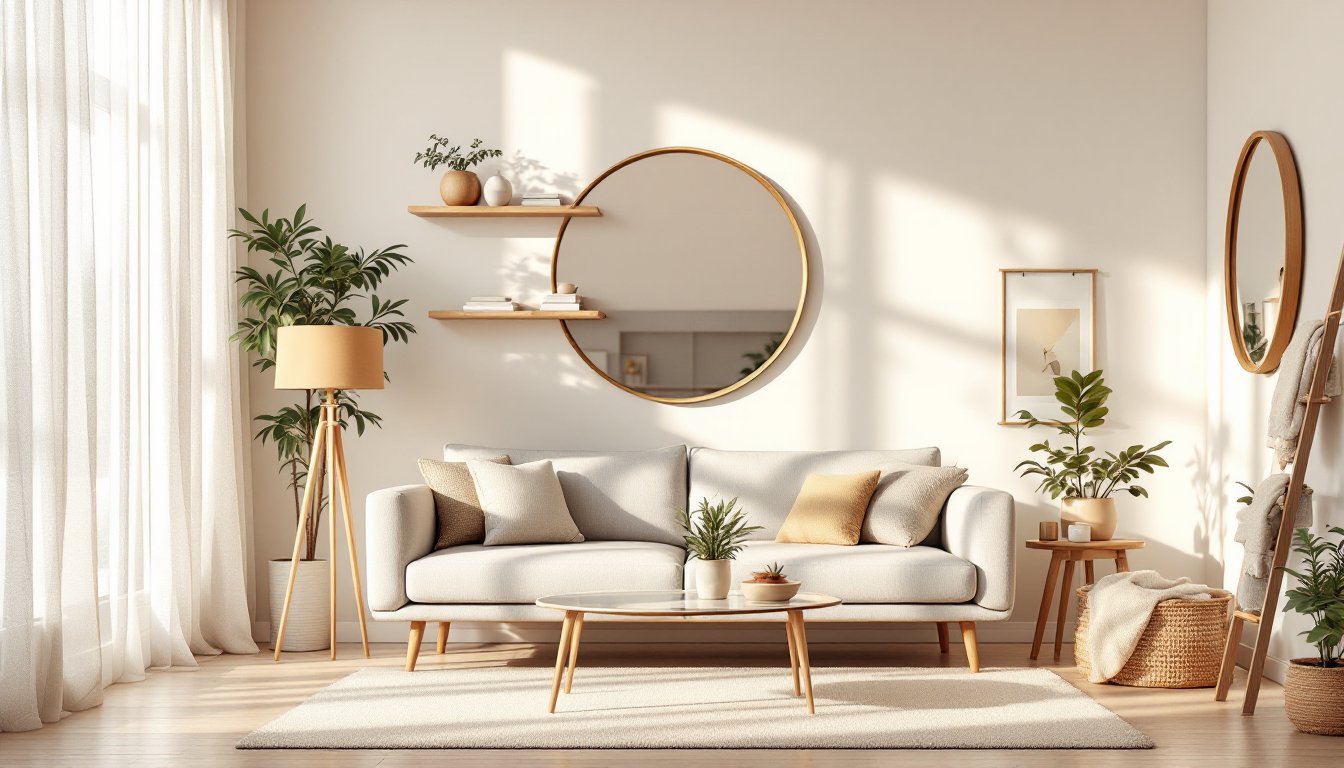


A modern wall mirror isn’t just a reflective surface, it’s a design anchor that defines your living room’s aesthetic while amplifying light and perceived space. Whether you’re drawn to sleek minimalism or bold geometric statements, the right mirror transforms walls from blank canvas to focal point. This guide walks you through today’s most impactful modern mirror styles, placement strategies, and the practical details that turn a good mirror choice into a great one. You’ll learn how to select, position, and optimize mirrors for both beauty and function, without overthinking it.
Table of Contents
ToggleKey Takeaways
- A modern wall mirror design serves as both a functional decor element and a light-amplifying anchor that expands perceived space and defines your living room’s aesthetic.
- Minimalist metal frame mirrors in brushed brass, matte black, or stainless steel are versatile workhorses that pair seamlessly with contemporary furniture and color schemes.
- Proper sizing follows the ⅓ to ½ rule—your modern mirror should occupy roughly one-third to half of your wall’s visual height and width for maximum visual impact.
- Always locate studs and use proper anchoring methods like French cleats or heavy-duty brackets, as mirrors weighing 20–40 pounds require secure installation to prevent accidents.
- Position mirrors at eye level (60–65 inches from floor to center) and angle them at 45° to windows to control glare while optimizing light reflection into seating areas.
- Sustainable options like reclaimed wood-framed mirrors cost more upfront but age beautifully and align with modern design’s emphasis on handcrafted, intentional materials.
Why Modern Mirrors Matter For Your Living Room
Modern mirrors serve a dual purpose: they’re functional decor that solves real design problems. A well-placed mirror bounces natural light across a darker room, making it feel larger and brighter without rewiring anything. They also anchor wall compositions and break up monotony in ways that less reflective decor can’t match.
Unlike ornate or vintage mirrors, modern designs use clean lines, minimal ornamentation, and materials like brushed metal, powder-coated steel, and natural wood frames. They complement contemporary furniture and don’t fight for attention with busy patterns or heavy gilt. In 2026, the trend leans toward intentional placement, a single statement mirror rather than a cluster, and frames that echo other hardware in your room (cabinet handles, light fixtures, shelf brackets).
A mirror’s impact depends on three factors: size, frame material, and placement. Get these right, and you’ve invested in a piece that stays relevant as trends shift. Ignore them, and you’ll end up with something that looks cramped, dated, or lost on the wall.
Minimalist Metal Frame Mirrors
Minimalist metal frames, brushed brass, matte black, and stainless steel, are the workhorses of modern living rooms. They’re clean, unfussy, and pair with nearly any color scheme. A brass frame adds warmth without gloss: matte black grounds a room with subtle sophistication: steel reads cool and industrial.
These frames typically measure 30–48 inches in diameter or width, which is large enough to feel intentional but not so massive they dominate. The frame itself is usually ¾ to 1½ inches thick, substantial enough to catch light but not chunky. You’ll find most at home stores in both round and rectangular shapes: the choice comes down to your wall composition. Round softens angular furniture: rectangular echoes window lines and shelving.
Installation is straightforward: locating studs, anchoring a French cleat or heavy-duty wall brackets, and checking level. Since mirrors can weigh 20–40 pounds depending on size and glass thickness, skipping the stud hunt invites a crash landing. Drywall anchors alone won’t cut it for anything larger than a small bedroom mirror.
When considering placement, think about sight lines and daily reflection angles. A mirror at eye level (roughly 60–65 inches from the floor to its center) works for most living room scenarios, though art-forward layouts sometimes hang mirrors slightly higher to create visual tension.
Geometric And Statement-Piece Mirrors
Geometric mirrors, hexagons, octagons, sunbursts, and asymmetrical shapes, make bold visual statements without relying on color or ornament. A sunburst mirror with radiating metal spokes reads midcentury-modern: a hexagonal wall mirror suggests contemporary geometry. These aren’t subtle pieces: they’re meant to be seen and talked about.
Designers pair geometric mirrors with minimalist surrounding decor, keep walls neutral, let the mirror be the star. A sunburst over a clean-lined sofa or a hexagon floating above a console creates a focal wall that anchors the whole room. Scale matters: a 36–42-inch geometric mirror works well in most living rooms: anything smaller can look precious, anything larger can feel claustrophobic if your room is under 200 square feet.
These mirrors often come in composite or plywood frames with real glass centers. The edges and spokes are typically finished in matte black, brushed gold, or natural wood. Real glass is worth the extra cost, it reflects light cleanly without distortion, whereas some budget options use acrylic, which yellows and scratches. Check product specs: genuine mirror glass is listed as “mirror-backed glass,” not “plastic reflective panel.”
Installing a heavy geometric piece requires the same stud-location discipline as minimalist frames, but asymmetrical weight distribution means you’ll want at least two anchor points, ideally three. A sunburst’s radiating arms shift weight unpredictably, so don’t rely on a single wall bracket.
Sustainable And Eco-Friendly Mirror Options
Eco-conscious homeowners increasingly seek mirrors made from reclaimed wood frames, recycled metal, or sustainably sourced materials. A mirror with a frame milled from reclaimed barn wood or salvaged steel doesn’t just reduce landfill waste, it brings texture and story to your room. These pieces often cost more upfront but age beautifully and skip the toxic finishing treatments common in mass-produced frames.
Look for mirrors certified by organizations like the Forest Stewardship Council (FSC) if the frame is wood, or suppliers who publicly track material sourcing. Glass itself is infinitely recyclable, so the mirror backing isn’t the environmental concern: it’s the frame and any coatings. Water-based finishes and natural oils (like linseed) are preferable to petroleum-based varnishes.
A reclaimed wood frame typically runs $150–400 depending on size and wood type, versus $50–150 for new particle board. Over 10+ years of use, that premium evens out. These mirrors also fit beautifully within the broader modern home decor conversation, handcrafted materials complement contemporary minimalism rather than clash with it.
One caveat: reclaimed and salvaged materials vary in color and finish. If you need exact color matching with other room elements, order samples or visit a showroom. Online photos rarely capture the true warmth or patina of aged wood.
Placement And Size Guidelines For Impact
Mirror placement is where most DIYers stumble. A small mirror in a cavernous wall looks lost: a huge mirror in a tight space feels oppressive. Start by measuring your wall: the mirror should occupy roughly ⅓ to ½ of the wall’s visual height and width. For a standard 8-foot ceiling and 12-foot wall, a 36–42-inch mirror centered horizontally hits the sweet spot.
Height matters equally. Hang the mirror’s center at eye level (60–66 inches from the floor) if it’s the only focal piece, or slightly above eye level (70–75 inches) if you’re layering it with other decor like floating shelves or console tables below. A mirror hung too low feels like it’s staring at you: too high and it reflects ceiling and upper walls instead of the room’s activity zone.
Avoid placing mirrors directly opposite windows if you want to control glare and reflections. Opposite a window, the mirror becomes a secondary light source that bounces harsh midday sun back into the room, great for dark corners, problematic if you’re trying to reduce screen glare or heat gain. Instead, angle mirrors at 45° to windows or place them on adjacent walls.
For multiple mirrors (which is less common in modern design but worth mentioning), space them at least 12 inches apart and keep them at the same height. This avoids visual clutter and maintains the “intentional” feel that defines 2026 aesthetics. If you’re adding a mirror to a wall with white rugs for living room or other light elements, ensure the mirror doesn’t create an overwhelming reflective battle.
Lighting And Reflection Optimization
Mirrors amplify available light, but how you position them relative to light sources determines success. A mirror across from or near a window increases natural brightness: facing a lamp or sconce reflects that light deeper into the room. Position mirrors to bounce light toward seating areas and dark corners where shadows tend to pool.
Wall sconces flanking a mirror create symmetry and add flattering task lighting. If you’re considering sconce installation, run the electrical rough-in before hanging the mirror so you can hide wires behind the frame or in the wall. This requires basic knowledge of NEC code (neutral and hot wires, proper gauge, overcurrent protection), doable for confident DIYers with outlet access nearby, but worth consulting an electrician if you’re uncertain. Many jurisdictions require permits for new circuits, especially in living areas.
Artificial light also matters. Mirrors facing warm LED bulbs (2700K color temperature) create inviting reflections: those facing cool white (5000K) can feel sterile. If your living room lighting leans warm, choose mirror frame finishes that complement that warmth, brass and wood, not chrome and steel. Test this by holding a mirror sample under your existing lights before committing.
Anti-glare coatings on mirror glass reduce harsh reflections without dimming brightness. These cost slightly more but prevent that jarring flash when light hits the mirror directly. For living rooms where evening TV viewing or relaxation is the goal, they’re worth the upgrade. Designers at Dwell and other contemporary design sites frequently highlight how light management shapes mood, mirrors are one of the cheapest tools available.
Conclusion
A modern wall mirror succeeds when it solves a problem, brightening a dim corner, anchoring a feature wall, or expanding perceived space, while looking intentional, not accidental. Whether you choose minimalist metal, bold geometry, or sustainable reclaimed wood, the three non-negotiables are proper sizing, secure installation, and thoughtful placement relative to light and focal points. Measure twice, hang once, and don’t skip the stud hunt. A $120 mirror installed badly looks cheap: installed right, it transforms the entire room.