
White kitchen cabinets have dominated interior design for nearly a decade, and for good reason. They brighten a space, adapt to virtually any style, and create an illusion of a larger kitchen, crucial for homeowners working with modest square footage. Whether you’re building a modern small white kitchen or updating an existing space, white cabinets offer flexibility that few other design choices can match. This guide covers everything from selecting the right finish to keeping those white cabinets kitchen pristine, helping you make informed decisions for a kitchen you’ll love for years to come.
Table of Contents
ToggleKey Takeaways
- White kitchen cabinets brighten spaces, create an illusion of larger kitchens, and provide timeless appeal that outperforms trendy colors in long-term resale value.
- Modern minimalist and traditional Shaker styles dominate white cabinet choices, with finish selection (lacquer, polyurethane, or paint-and-glaze) determining durability and maintenance requirements.
- Thoughtful coordination of countertops, backsplashes, hardware, and flooring transforms a white cabinet kitchen from basic to sophisticated, with darker accents providing grounding contrast.
- White cabinets require realistic daily maintenance to prevent visible dust and fingerprints, including weekly soft-cloth cleaning with pH-neutral cleaner and monthly deeper cleaning to address grease.
- Budget for white kitchen cabinet renovation ranges from $3,000–$35,000+ depending on stock versus custom options, with cost-saving alternatives like door replacement or professional refinishing available for budget-conscious homeowners.
Why White Kitchen Cabinets Remain Timeless
White kitchen cabinets continue to lead design trends because they solve real problems. They reflect light, making small white kitchen spaces feel airier and more open. Functionally, white works as a neutral backdrop, allowing countertops, backsplashes, and hardware to take visual focus. Unlike trendier colors that peak and fade, white kitchen design ideas have proven staying power across decades of real estate markets.
From a resale perspective, neutral white cabinetry appeals to broader buyer demographics than bold colors or trendy finishes. A kitchen with white cabinets doesn’t scream “outdated” the way some color choices do within five years. Homeowners also appreciate that white cabinets work across style transitions, if your taste shifts from farmhouse to contemporary, your cabinet bones remain relevant.
Practically speaking, white cabinet finishes allow for easier coordinating. Backsplash styles, hardware finishes, and countertop materials pair naturally without fighting for visual attention. This flexibility is why white kitchen ideas continue to fill design blogs and renovation portfolios.
Popular White Cabinet Styles and Finishes
Modern Minimalist vs. Traditional Shaker
Two styles dominate white cabinet choices: modern minimalist and traditional Shaker. Modern small white kitchen ideas typically feature flat-panel doors (sometimes called slab doors), hidden hardware, and flush-fitting designs that minimize visual interruption. These cabinets prioritize clean lines and streamlined aesthetics. Finishes tend toward matte or ultra-matte options that feel more contemporary, sometimes with integrated handle grooves instead of visible hardware.
Traditional Shaker-style white cabinets include a recessed center panel framed by rails and stiles, creating visual texture and depth. This style pairs naturally with brass or oil-rubbed bronze hardware and complements farmhouse or transitional kitchens. Shaker doors cost slightly less than custom flat-panels and hide dust better due to the raised-panel profile.
Beyond the door style, finish choice matters enormously. Lacquer offers high durability and a polished appearance but requires ventilation during application and occasional polishing to maintain sheen. Polyurethane provides a middle ground, durable, water-resistant, and available in matte, satin, or gloss sheens. Paint-and-glaze finishes create subtle depth with aged or farmhouse appeal. Each finish has trade-offs between durability, appearance, and maintenance demands. A modern small white kitchen often favors lacquer or satin polyurethane for its contemporary aesthetic. Consider your lifestyle and tolerance for maintenance when selecting finish type.
Designing Your White Kitchen Layout
Countertop and Backsplash Pairings
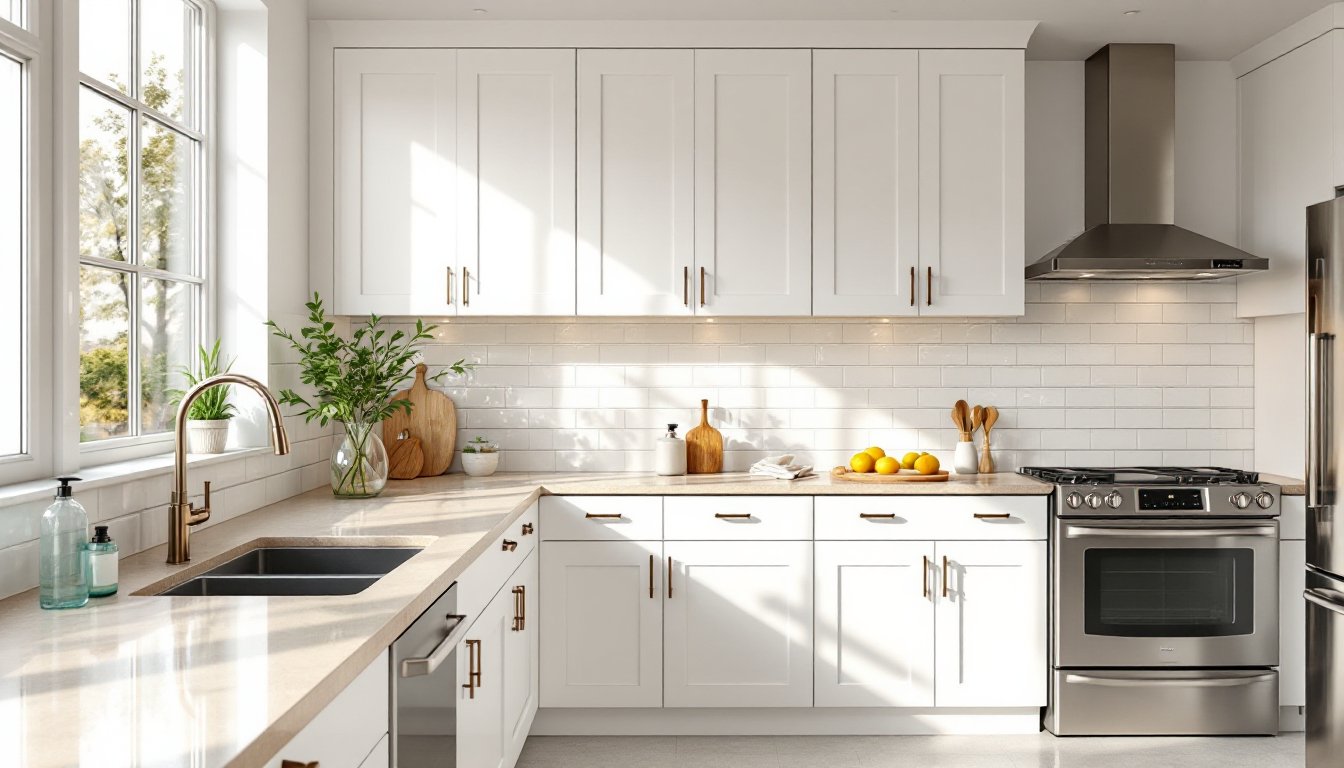
White cabinets in kitchen spaces demand thoughtful color and material coordination. Countertop selection has the biggest visual impact. Light gray, warm beige, or soft cream countertops create a monochromatic look that feels calm and sophisticated. Warmer undertones in quartz or granite prevent the space from feeling clinical or sterile. If you prefer contrast, darker counters (charcoal, deep gray, or navy blue) ground the kitchen and add visual interest without overwhelming smaller footprints.
Backsplash placement and material dramatically shift kitchen aesthetics. Subway tile in white or soft gray maintains cohesion while adding subtle texture. Herringbone or chevron patterns introduce visual rhythm without color clash. For those seeking personality, consider colored subway tile, patterned encaustic tile, or shiplap, these elements work because white cabinets remain the neutral anchor. Kitchen design ideas featuring white cabinets often pair them with unexpected backsplash choices precisely because the cabinet neutrality allows bolder secondary elements.
Hardware deserves mention here. Stainless steel, chrome, and polished nickel suit modern white kitchens. Brass, bronze, and copper add warmth to traditional white cabinet layouts. Matte black hardware has gained popularity recently for contemporary homes. Your hardware should feel intentional and coordinate with lighting fixtures and any visible plumbing for design cohesion.
Don’t overlook flooring in white kitchen design. Light oak, gray tile, or light gray concrete pair naturally with white cabinets. Darker wood or charcoal tile provides grounding without overwhelming the space. Avoid glossy finishes in active kitchens, slipping while carrying hot cookware isn’t worth the aesthetic appeal.
Keeping White Cabinets Clean and Pristine
White cabinets demand realistic maintenance expectations. They show dust, fingerprints, and splatters more readily than darker finishes. Accept this upfront: it’s the trade-off for brightness and style.
Daily cleaning prevents buildup. Wipe cabinet faces with a soft, damp microfiber cloth and pH-neutral cleaner. Avoid ammonia-based glass cleaners or abrasive scouring pads that scratch finishes. For dried food splatters, use warm soapy water and let it soften the residue before wiping, force damages finish. Keep a small cloth handy near cooking zones for quick cleanup.
Monthly deeper cleaning addresses grease buildup. Mix warm water with a few drops of mild dish soap, dip a cloth, wring thoroughly so it’s barely damp (excess water damages wood and finishes), and clean all surfaces. Dry immediately with a separate cloth to prevent water spotting. For stubborn grease, add a single drop of white vinegar to the soapy water, vinegar’s acidity cuts grease without the harshness of ammonia.
Avoid furniture polish, beeswax products, or oil-based cleaners unless your cabinet finish specifically recommends them. Modern lacquer and polyurethane finishes don’t need supplemental shine, it can build up and make surfaces look dull. Hardware gets dull with fingerprints: occasional polishing (using the appropriate product for your hardware material) keeps it looking intentional.
For paint-and-glaze finishes particularly, prevent moisture damage. Ensure kitchen ventilation runs during cooking, steam and humidity cause white cabinets to soften and peeling becomes likely over time. If you notice any finish damage, spot-touch-up with the original paint and glaze rather than attempting full cabinet refinishing. Kitchen organization experts emphasize that intentional placement of items on counter surfaces reduces unnecessary cabinet opening and closing, which lessens dust accumulation and fingerprint exposure.
Cost Considerations and Budget Planning
White cabinet pricing varies enormously based on source and construction quality. Stock cabinets from big-box retailers run $3,000 to $8,000 for a modest kitchen: semi-custom options range $8,000 to $15,000: and full custom cabinetry spans $15,000 to $35,000+. These are approximate baseline figures, actual costs depend on your region, cabinet depth, linear footage, hardware selections, and finish complexity.
When budgeting, factor in installation costs separately. Cabinet installation typically runs 20–30% of material cost, though labor rates vary significantly by market. Hidden costs include new hardware (often $500–$1,500 for a full kitchen), potential countertop modifications, and any electrical work if you’re repositioning outlets.
If budget constraints are tight, consider refinishing existing cabinets instead of replacement. Professional cabinet painting or lacquering costs $3,000 to $8,000 for a full kitchen and preserves existing structure. DIY painting is cheaper (~$500–$1,500 for materials) but demands meticulous surface prep and dust containment. If you go the DIY route, expect 4–6 weeks of kitchen disruption and plan for proper ventilation.
Another cost-saving approach: replace cabinet doors only rather than the entire case. This works if your cabinet boxes are still structurally sound and cabinet footprints don’t need changing. New doors can cost 40–60% less than full replacement while delivering a dramatic visual refresh.
Finish selection affects cost. Paint is least expensive: lacquer and polyurethane cost more but offer superior durability. Specialty finishes like glaze or distressed looks command premium pricing. When comparing quotes, ask whether the finish includes hardware installation, soft-close mechanisms (which add $30–$50 per door but prevent slamming and feel quality), and warranty terms.