

Building blocks construction isn’t just child’s play; it’s the foundation of creativity, innovation, and maybe even a future architectural marvel. Imagine a world where the sky’s the limit, and every tower, bridge, or spaceship is crafted with the same joy and enthusiasm that kids bring to their block sets. Whether it’s for a school project or a weekend DIY adventure, building blocks can transform anyone into a miniature architect.
Overview of Building Blocks Construction
Building blocks construction serves as a vital tool for enhancing creativity and innovation. These blocks provide a hands-on approach to design, allowing users to create everything from simple structures to complex architectural models. Educational environments often incorporate building blocks to teach fundamental concepts of engineering and design.
Constructing with blocks promotes essential skills such as problem-solving, spatial awareness, and teamwork. In classrooms, children collaborate on projects, fostering communication and shared learning. When working on personal DIY projects, adults engage in building that sparks creativity and personal expression.
Various types of building blocks contribute uniqueness to construction. Wooden blocks offer durability and aesthetic appeal, while plastic blocks bring versatility and ease of use. Magnetic blocks add a dimension of exploration, encouraging builders to experiment with shapes and structures.
The role of building blocks extends beyond mere play; it impacts various fields such as architecture and engineering. Professionals often utilize the basic principles learned through block construction in real-world applications, creating innovative solutions. The journey from playful exploration to professional design illustrates the profound influence of building blocks across all ages.
Communities often host competitions to celebrate skills in building with blocks. These events showcase creativity and innovation, inspiring participants to push their limits. Thus, the world of building blocks continues to evolve, making it an essential aspect of both education and personal development.
Types of Building Blocks
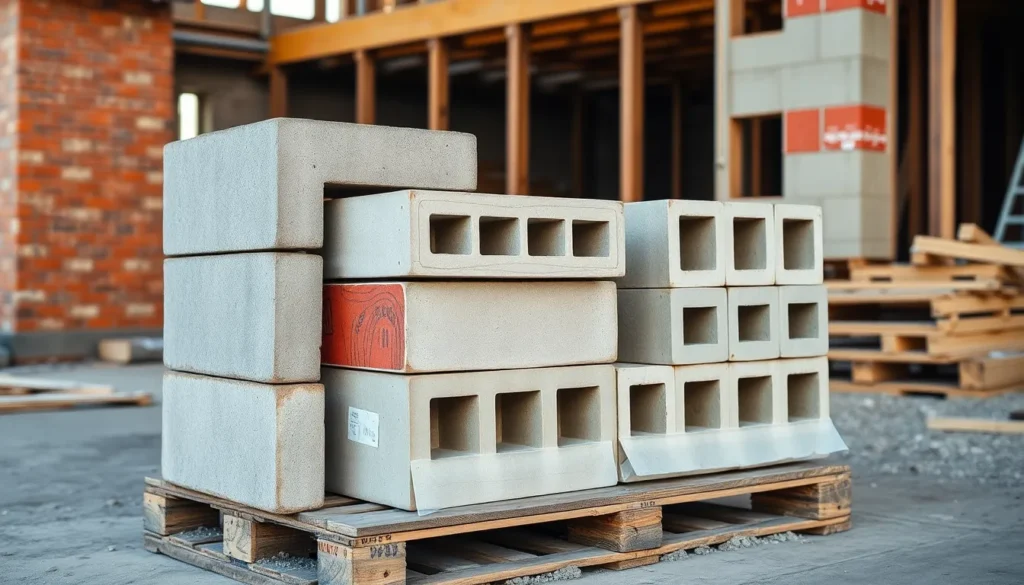
Various types of building blocks serve distinct purposes in construction and design. Each block type offers unique properties, making them suitable for different applications.
Concrete Blocks
Concrete blocks, also known as concrete masonry units, consist of cement and aggregate. They provide strength and durability, making them ideal for structural walls, foundations, and outdoor projects. Typically, these blocks measure 8 inches by 8 inches by 16 inches. Builders appreciate concrete blocks for their fire resistance and sound insulation, enhancing safety and comfort in buildings. Additionally, their versatility accommodates various finishes, allowing for aesthetic customization in residential and commercial structures.
Hollow Blocks
Hollow blocks are lightweight alternatives made from concrete, featuring hollow cores that reduce weight and material costs. These blocks enhance thermal insulation, making them energy-efficient for building projects. Standard dimensions include 8 inches high, 16 inches long, and 6 to 12 inches wide. Their design allows for quicker construction and easier handling. Hollow blocks often find use in non-load bearing walls, partitions, and infill panels, effectively meeting the needs of modern architecture and design.
Insulated Blocks
Insulated blocks are engineered with a layer of insulating material, such as foam, sandwiched between concrete layers. These blocks excel at thermal performance, significantly reducing energy consumption in buildings. Common sizes mirror standard concrete blocks, promoting seamless integration into construction. Builders favor insulated blocks for exterior walls in climates with extreme temperatures. Their properties help maintain comfortable indoor environments while lowering heating and cooling costs, making them a wise choice for energy-conscious projects.
Advantages of Building Blocks Construction
Building blocks construction offers numerous benefits, enhancing projects across various domains. These features include durability, cost-effectiveness, and energy efficiency.
Durability and Strength
Building blocks exhibit remarkable durability. Many materials withstand harsh weather conditions and physical wear, making them suitable for diverse applications. Concrete blocks, for example, endure extreme conditions due to their robust composition. Stability plays a key role in ensuring the longevity of structures. Architects and builders often select building blocks that provide reliability, resulting in safe and lasting constructions.
Cost-Effectiveness
Cost considerations significantly influence material choice in construction. Building blocks provide an affordable option for both small projects and large-scale developments. Minimal maintenance requirements further reduce overall expenses. Additionally, the ease of installation allows builders to save on labor costs. Economical construction materials ensure projects remain within budget while maintaining quality. Selecting building blocks can lead to substantial savings, making them an attractive choice for homeowners and developers alike.
Energy Efficiency
Energy efficiency remains a crucial factor in modern construction. Insulated building blocks enhance thermal performance, reducing energy consumption in heating and cooling. Selecting these materials translates to lower utility bills for occupants. Moreover, building blocks’ thermal mass helps stabilize indoor temperatures, improving comfort levels. Environmentally conscious choices promote sustainability in construction, contributing to long-term savings and positive environmental impact. Energy-efficient structures appeal to a growing market focused on sustainability.
Applications of Building Blocks Construction
Building blocks construction finds extensive applications in various sectors, prominently in residential and commercial environments.
Residential Buildings
Building blocks contribute significantly to residential construction. Many homeowners opt for concrete blocks due to their durability and strength. Insulated blocks enhance energy efficiency, providing better thermal performance for homes. A diverse selection of building blocks allows for creative customization in architectural designs. Creating unique layouts becomes simpler, allowing homeowners to express personal styles through their living spaces. Additionally, lightweight hollow blocks streamline the construction process, reducing labor costs and time. Cost savings are crucial for families looking to build or renovate, making these blocks a preferred choice in residential projects.
Commercial Structures
Building blocks also play a vital role in commercial structures. Businesses favor concrete blocks for their robustness, essential for high-traffic areas. The use of insulated blocks in offices improves energy conservation, leading to reduced utility expenses. Many warehouses and retail spaces benefit from the ease of installation associated with modular block systems. Efficient layouts can be designed quickly, accommodating various business needs. Utilizing building blocks fosters versatility in construction, allowing for rapid expansion or modification of commercial spaces. These qualities position building blocks as an indispensable element for future commercial constructions.
Future Trends in Building Blocks Construction
Innovation continues to reshape building blocks construction, leading to new materials and techniques. Advanced eco-friendly materials are gaining traction, emphasizing sustainability while ensuring structural integrity. Manufacturers are now producing blocks with recycled content, reducing waste and promoting greener building practices.
Digital tools like Building Information Modeling (BIM) enhance the design and planning processes. Such technology allows architects and builders to visualize projects more comprehensively, streamlining collaboration and reducing errors. The rise of modular construction is also notable, where pre-fabricated blocks speed up build times and reduce onsite disruptions.
Smart building blocks are emerging, incorporating sensors that monitor structural health. These blocks contribute to increased safety and efficiency, providing real-time feedback on the condition of structures. As automation evolves, robotic technology may facilitate the construction of building blocks, making the process faster and minimizing labor costs.
Virtual reality (VR) is becoming a popular tool for planning and simulating building projects. Designers and clients can explore structures in an immersive environment, enhancing communication and satisfaction. Crowdsourced design platforms are allowing individuals to share ideas and innovations, pushing creative boundaries in building block construction.
Lastly, education is increasingly focusing on the integration of building blocks in curricula. Schools introduce blocks not just as play items but as essential tools for learning design principles, engineering concepts, and collaborative skills. This trend equips future generations with the knowledge needed to excel in our rapidly evolving architectural landscape.
Building blocks construction is more than just a childhood pastime; it’s a gateway to creativity and innovation across various fields. As individuals embrace these versatile tools, they unlock potential in architecture, engineering, and personal projects. The benefits of durability, cost-effectiveness, and energy efficiency make building blocks an appealing choice for both residential and commercial applications.
With technological advancements paving the way for smarter building solutions, the future of building block construction looks promising. As communities continue to celebrate creativity through competitions and collaborative projects, the impact of building blocks on learning and development remains profound. Embracing this dynamic medium not only nurtures imagination but also fosters essential skills for the next generation of builders and designers.