
A modern kitchen does more than cook meals, it’s the functional heart of a home, where style meets everyday practicality. Whether you’re planning a full renovation or refreshing your current space, understanding today’s design trends helps you make choices that feel current without chasing fleeting fads. In 2026, modern kitchens balance clean lines, smart storage, and sustainable materials with genuine functionality. The best designs don’t sacrifice usability for Instagram appeal. This guide walks you through the essential trends shaping kitchen design right now, plus practical advice for bringing them into your own space without very costly or getting overwhelmed.
Table of Contents
ToggleKey Takeaways
- Modern kitchen design balances clean lines, smart storage, and sustainable materials with genuine functionality rather than sacrificing usability for aesthetic appeal.
- Define your kitchen aesthetic by collecting 20–30 inspiring images and identifying patterns in your preferences, then ensure your design complements your home’s existing architecture.
- Smart storage solutions—including drawer dividers, pull-out organizers, and hidden hardware—are essential to modern kitchen design and create the orderly, intentional look homeowners seek.
- Layer three types of lighting (ambient, task, and accent) with pendant lights over islands, under-cabinet LED strips, and dimmer switches to create both functional workspace and inviting atmosphere.
- Two-tone cabinetry, warm neutrals like Sherwin-Williams Alabaster, and matte hardware finishes are trending in 2026 and add visual interest without feeling dated.
- Prioritize durable, quality materials—FSC-certified wood cabinets, solid plywood, energy-efficient appliances, and sustainable options—as they outlast cheaper alternatives and reduce long-term costs and environmental impact.
Define Your Modern Kitchen Aesthetic
Modern kitchen design doesn’t mean one look. It’s a spectrum ranging from minimalist (think: flat-front cabinets, hidden handles, zero countertop clutter) to maximalist modern (bold colors, mixed textures, statement lighting). Before you order anything, nail down which direction appeals to you.
Start by looking at photos that genuinely excite you, not what you think you should like. Save 20–30 images on your phone. Look for repeating patterns: Do you gravitate toward all-white interiors? Warm wood tones? Matte black hardware? Two-tone cabinet schemes? Your natural preferences will reveal your aesthetic faster than any design quiz.
Consider your home’s existing architecture too. A Victorian farmhouse kitchen pulling hard-edge industrial design reads awkward: a sleek urban apartment with cottage elements feels forced. Modern design works best when it complements (or intentionally contrasts with) the home’s bones. Modern Home Decor: Transform emphasizes this balance, your kitchen should feel like it belongs in your home, not like it wandered in from a showroom. Spend time in your kitchen during different times of day. How does natural light hit the walls? Which corner feels cramped? These observations will guide smarter design choices.
Smart Storage Solutions and Organization
A hallmark of modern kitchen design is making storage invisible, or at least orderly and intentional. Open shelving looks great for two weeks: then it collects dust and visual chaos. Smart storage means everything has a place, and most of it stays hidden behind cabinet doors.
Consider installing drawer dividers and pull-out organizers inside cabinets. A pull-out spice rack, tiered shelf risers for plates, or deep drawer inserts for pots turn dead space into working real estate. Corner cabinets notorious for waste? A blind-corner pull-out or lazy Susan fixes that. Modern kitchens also favor deeper drawers over shallow ones, they hold more and reduce the visual clutter of too many drawer pulls interrupting the cabinet face.
Bar-pull handles and hidden cup pulls align with the clean-lined aesthetic most homeowners seek. If you’re keeping existing cabinetry, replacing hardware is one of the cheapest cabinet updates. Measure the existing holes before ordering: most are drilled on 96mm (3.75-inch) or 128mm (5-inch) centers. Hardware finishes matter too. Matte black, brushed stainless, and polished brass dominate 2026 choices: shiny chrome reads dated by comparison.
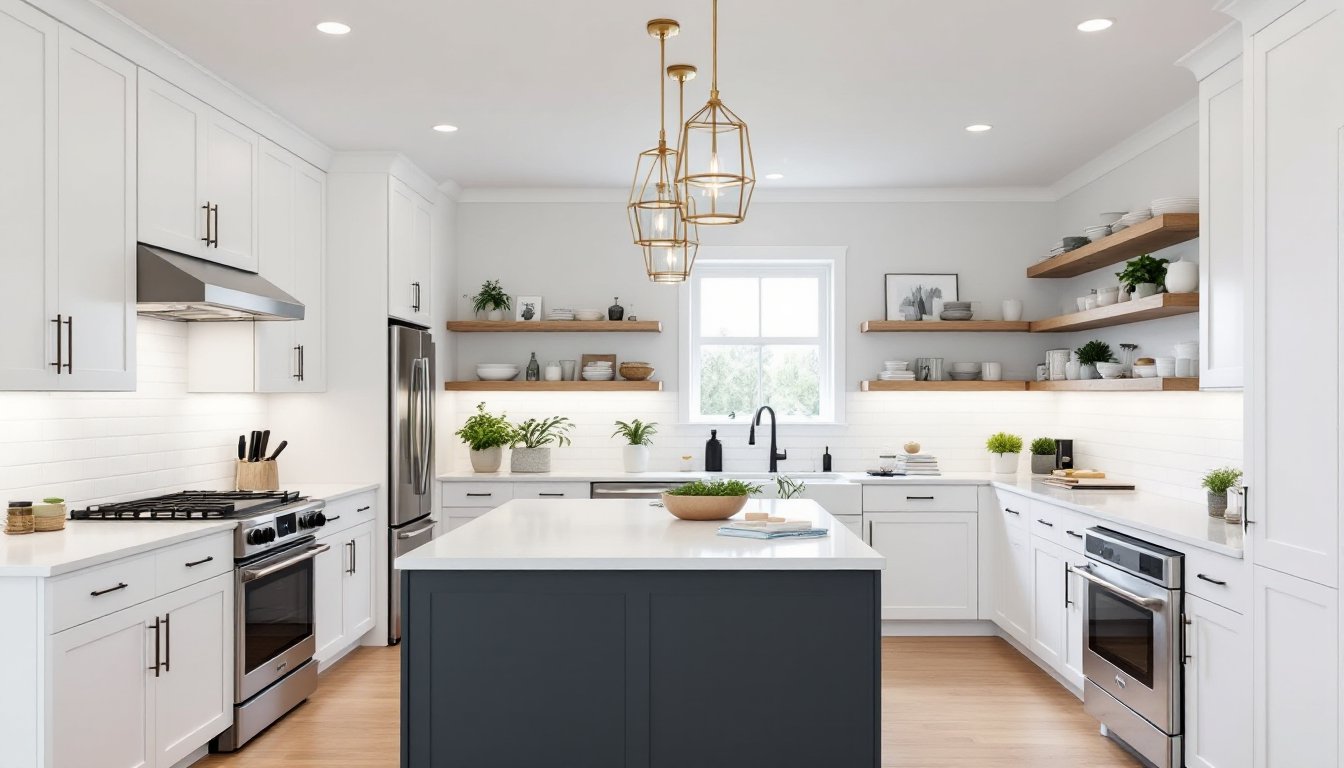
If a full cabinet renovation isn’t in the budget, open shelving above the range (styled with cookbooks, plants, and dishware you actually love) or floating shelves alongside the refrigerator add breathing room without the commitment. Keep open shelves curated though, mixing mismatched plates and half-empty jars defeats the purpose.
Color Palettes and Material Choices
Neutral Tones and Bold Accents
White, soft gray, and warm cream remain kitchen workhorses because they’re forgiving, enlarge smaller spaces, and age gracefully. But pure white can feel sterile. Warm whites (with subtle yellow or taupe undertones) are trending over cool whites. Sherwin-Williams Alabaster, Benjamin Moore Simply White, or Farrow & Ball Wimborne White are designer favorites for this reason.
Two-tone cabinetry, pairing light upper cabinets with darker lower cabinets, adds visual interest without commitment to a bold all-over color. A soft white above with charcoal or forest green below creates depth and grounds the space. This works especially well on galley kitchens or open-concept layouts.
Bold accent colors live on islands, a single wall, or kitchen nook seating rather than all cabinetry. Deep navy, forest green, terracotta, and warm black are modern favorites that don’t feel trendy when paired with neutral walls and classic hardware. Modern kitchen cabinets design leans toward matte finishes (lacquer or acrylic) rather than glossy ones: they feel more refined and hide fingerprints better.
Material choice matters as much as color. Natural wood (walnut, oak, or cherry) adds warmth: flat-front plywood cabinetry with veneer (not particleboard) resists warping better over years. Laminate and thermofoil are budget-friendly but don’t age as elegantly. For countertops, quartz is practical and durable, but butcher block and concrete are gaining ground because they photograph well and feel intentional, just know they need more maintenance. Backsplash trends favor subway tile (still), small hexagon mosaics, or minimal coverage (just behind the range). Large format tiles reduce grout lines and feel more contemporary.
When selecting materials, 10 Easy Pieces: Modern Kitchen Cabinets showcases how leading brands balance aesthetics with durability, worth a look if you’re narrowing cabinet options.
Lighting and Functional Design
Lighting makes or breaks a modern kitchen. Overhead recessed lights alone are flat and uninviting: modern design layers three types: ambient (general brightness), task (focused work lighting), and accent (mood or highlighting features).
Pendant lights over an island are near-mandatory now. Choose fixtures that reflect your style, simple geometric shapes, frosted glass, or industrial metal. Aim for 24–30 inches from the countertop surface to the fixture bottom. Space multiples 30–36 inches apart for balanced coverage. Under-cabinet task lighting (LED strips, not the outdated halogen bars) illuminates countertops where you prep food: these should be hard-wired or plug into hidden outlets, not trailing cord across your backsplash.
Dimmer switches for every light layer give you flexibility. A bright, clinical kitchen for meal prep shifts to warm, ambient lighting for entertaining. Smart bulbs (dimmable, color-temperature adjustable) feel luxe but aren’t required for modern design, good design principles matter more than tech.
Functional design also means workflow. The classic kitchen triangle (sink, stove, fridge) still applies, though open-concept living blurs those lines. If your stove, refrigerator, and sink sit in a line, movement feels efficient. Island placement matters too, aim for 36–42 inches of clearance on all sides for comfortable traffic flow. Under-island seating (stools) takes up floor space but adds function and gathering potential. Don’t sacrifice walkways for a trendy island if your kitchen is tight.
Sustainable and Eco-Friendly Options
Sustainability isn’t just ethical, it’s practical and increasingly affordable. Modern kitchen design embraces materials and choices that last longer, require fewer replacements, and minimize waste.
FSC-certified wood cabinets come from responsibly managed forests. Solid plywood construction outlasts particleboard, reducing future landfill waste. Low-VOC (volatile organic compound) paints and finishes protect indoor air quality while you’re working in tight kitchens. Look for cabinet manufacturers with environmental certifications, it’s easier than you’d think.
Energy-efficient appliances (ENERGY STAR rated) cost less to run and appeal to future buyers. Induction cooktops are more efficient than gas, though they require magnetic cookware. LED under-cabinet and pendant lighting draws a fraction of incandescent power. Water-efficient faucets with aerators reduce waste without compromising flow.
Reclaimed or salvaged wood for shelving, accents, or butcher-block counters gives character while diverting materials from dumps. Recycled glass countertops and backsplash tiles also align with modern sustainability values. Don’t feel pressured to buy everything eco-certified: prioritize where it matters most to you. A durable solid-wood cabinet built to last 20+ years beats replacing a cheaper option every 5 years, regardless of its eco-label.
Resources like The Kitchn regularly cover sustainable kitchen updates and material comparisons if you want deeper research into specific products.
Practical Tips for Your Kitchen Redesign
Before you start tearing out cabinets or ordering fixtures, measure twice and plan on paper (or use a simple CAD app). Kitchen measurements matter down to the inch: appliance width (refrigerators vary), faucet reach over the sink, window sills that block outlets, and existing electrical placement.
Set a realistic budget and allocate percentages thoughtfully. Cabinets typically consume 30–40% of a kitchen budget: appliances another 20–30%: countertops and backsplash, 15–20%: and lighting/hardware/labor split the rest. If you’re spreading costs over time, prioritize durability items first (cabinetry, countertops) before trend-dependent finishes.
Order samples of paint colors, hardware finishes, and countertop materials. See them in your kitchen lighting at different times of day, not under showroom LED floods. What looks perfect in bright store light might feel wrong in a north-facing kitchen or under warm-toned lighting.
Permits and contractors vary by jurisdiction. Structural changes (moving walls, relocating plumbing, rewiring), new gas lines, or adding exhaust venting typically require permits and licensed professionals. Painting cabinets and swapping hardware are DIY-friendly. Cabinet refacing (applying veneer over existing frames) splits the difference, less invasive than full replacement, more impactful than paint alone.
Work with one eye on trends and one on timelessness. Modern design elements, clean lines, quality materials, good lighting, smart storage, age better than color-heavy schemes. You can update paint, hardware, and decor affordably later. A well-built cabinet structure lasts decades. Design Milk regularly features renovation case studies showing how thoughtful material choices create kitchens that look fresh years after completion.