
Open kitchen design removes the physical and visual barriers between cooking, dining, and living spaces, creating a more connected home. Whether you’re planning an open concept kitchen remodel or just exploring what this layout offers, understanding the fundamentals helps you decide if it’s right for your family. This approach has become popular for good reason: it makes small homes feel bigger, keeps families together during meal prep, and gives your kitchen the visual prominence it deserves. But it’s not just about knocking down walls, successful open kitchen design ideas balance aesthetics, functionality, and the realities of daily living.
Table of Contents
ToggleKey Takeaways
- Open kitchen design removes walls and physical barriers to create connected living, cooking, and dining spaces that make homes feel larger and keep families engaged during meal preparation.
- Successful open kitchen design requires strategic planning for zoning, traffic flow, and storage solutions—particularly islands and peninsulas that provide visual separation without blocking sightlines.
- Address common open kitchen challenges with powerful range hoods for cooking odors, sound-dampening appliances for noise control, and layered lighting to prevent the space from feeling cold or imposing.
- Open kitchen layouts maximize natural light, improve air circulation, and add significant resale appeal, especially in smaller homes or urban settings where space optimization matters most.
- Before renovating, assess whether walls are load-bearing (requiring professional beam installation) or non-load-bearing, plan utility relocations carefully, and obtain permits—professional installation of structural, electrical, and plumbing work is essential for safety and compliance.
What Is Open Kitchen Design and Why It Works
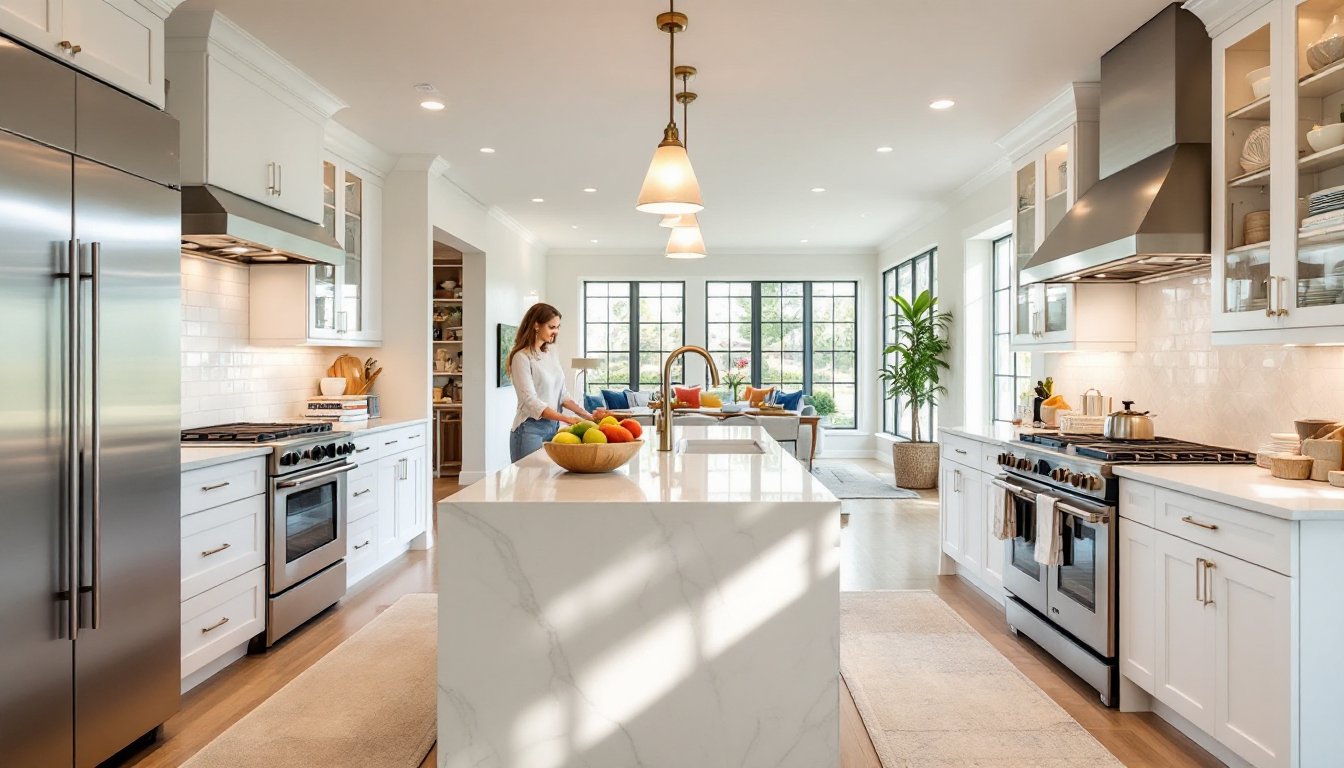
An open kitchen layout eliminates upper cabinets, removes full walls between the kitchen and adjacent living or dining areas, or uses partial dividers like islands instead of solid barriers. The goal is sightlines, you can see and interact with people in the living room while preparing food, and your kitchen becomes part of the social hub rather than a hidden workspace.
This works because most households spend significant time in kitchens. Rather than isolating the cook, an open layout keeps families engaged. Parents monitor children, spouses coordinate dinner prep, and guests can chat while you’re working. From a design perspective, an open kitchen makes rooms appear larger and more cohesive. Light travels freely, and the space feels intentional rather than compartmentalized.
But, open doesn’t mean no design thinking. It actually requires more planning because your kitchen is visible from multiple angles. Countertops, cabinetry, and finishes become part of the living room’s visual story. Appliances need to be both functional and presentable. This is why successful open designs pair thoughtful layout with deliberate material and color choices.
Key Benefits of an Open Kitchen Layout
The main advantage of an open kitchen is flow. Without walls blocking movement, traffic patterns become natural. Retrieving ingredients, plating dishes, and clearing the table happen smoothly. Families can work in shifts without colliding.
Second, an open layout maximizes natural light and ventilation. Removing upper cabinetry above a window wall, for instance, lets daylight flood the entire combined space. This reduces daytime reliance on lighting and makes colors appear more accurate. Better air circulation also helps when cooking generates steam or odors, open connections to adjacent rooms dilute smells rather than trapping them over the stove.
Third is the psychological benefit of togetherness. You’re cooking dinner while supervising assignments. Children see food preparation as normal, not mystery. Entertaining becomes easier because you’re not stuck isolated. Guests naturally congregate in a visual kitchen rather than a closed-off room.
Finally, an open layout adds resale appeal. Many buyers view open concept as modern and desirable, particularly in smaller homes or urban settings where every square foot matters. When you eventually sell, this remodel often recoupes a higher percentage of its cost than many other kitchen projects.
Design Essentials for a Successful Open Kitchen
Zoning and Traffic Flow
Just because walls are gone doesn’t mean zones disappear. You’ll still have a prep area, cooking zone, and cleanup space, they just need clear visual boundaries and intelligent placement. An island or peninsula is your best tool here. It anchors the kitchen visually and creates a subtle separation between the cooking area and living space without blocking sightlines entirely.
Traffic flow matters enormously. The classic work triangle (connecting sink, stove, and refrigerator) still applies: the distances should allow easy movement between these points without unnecessary steps. But, in open kitchens, you also need to consider transition zones. Where do people walk from the living room to the kitchen entrance? How do they move from the kitchen to the dining table? Place your island or major appliances to guide this natural flow, not block it.
Consider sight lines carefully. If you’re sitting on the living room sofa, what do you see? If it’s the back of your stovetop and a wall of open shelving, rethink the layout. Instead, position the island or peninsula so that finished edges and decorative elements face the living space, while functional, less-polished zones (the stove area, deep storage) face inward or are partially screened.
Storage and Organization Solutions
Without upper cabinets, storage becomes tight. Plan for this before you start demolition. Consider deeper lower cabinets (24 to 30 inches is standard: deep models maximize vertical space), tall pantry cabinets at the room perimeter, and drawer organizers for utensils and tools that would’ve lived in wall-mounted cabinets.
Open shelving, if you use it, must be intentional. Anything visible needs to look cared for, stacked plates, matching bowls, a few chosen cookbooks, plants. Clutter reads as sloppy. If you’re not naturally organized, skip open shelving and use closed cabinetry with glass doors (you get the openness but can hide the chaos inside).
An island with a sink and dishwasher is storage gold. The base offers drawer space for linens, tools, and cookware, while the raised counter hides day-to-day clutter from the living room view. If your layout allows, add a beverage refrigerator or wine cooler in the island, functional, attractive, and doesn’t require upper-cabinet space. Vertical storage, like a magnetic knife strip or hanging pot rack, keeps essentials accessible without eating into drawer real estate. Professional kitchens use wall-mounted storage for a reason: it’s efficient and visual.
Common Challenges and How to Solve Them
The biggest challenge with open kitchens is cooking odors and steam. Frying fish or stewing cabbage will perfume your entire home. Mitigate this with a powerful range hood. Standard overhead hoods are functional but visually heavy in open layouts. Consider a downdraft vent built into the island or cooktop (less intrusive visually), or invest in a high-end hood with a stainless steel or custom finish that becomes a design feature rather than an eyesore. But, downdrafts are less effective than overhead hoods at capturing steam: choose based on your cooking habits.
Noise is the second issue. Open kitchens amplify dishwasher rumble, garbage disposal sounds, and blender whirring. Install sound-dampening dishwashers (check decibel ratings, look for 44 dB or lower), use rubber flooring or mats near the sink for impact sound reduction, and consider a quieter garbage disposal model or even a manual composting setup if noise bothers you.
A third challenge is sightlines to mess. Dishes pile up quickly and are visible from the sofa. The solution? A strategically placed dish drawer or under-counter dishwasher that faces the kitchen, not the living room. Keep a decorative basket near the sink for quick cleanup before guests arrive. An island facing the living room should have drawers or closed storage (no open shelving on that side).
Finally, open kitchens can be cold or imposing if poorly lit. A well-designed open kitchen needs layered lighting: overhead options (pendant lights above the island are popular), under-cabinet task lighting for the counter, and ambient living room lights that blend seamlessly. This prevents the kitchen from feeling like a spotlight stage at night.
Links to resources can help visualize solutions, Houzz’s open kitchen gallery shows real layouts managing these challenges, and Remodelista’s curated open kitchens highlight minimalist approaches that prove less is often more.
Practical Steps to Plan Your Open Kitchen Renovation
Start with a structural assessment. Determine which walls you can remove. Load-bearing walls, those supporting joists, roof, or upper-floor weight, can’t simply disappear. You’ll need a structural engineer to design a beam (steel or engineered lumber) to carry the load. This isn’t a DIY job: it requires permits and licensed installation. Budget $3,000 to $8,000+ for beam design and installation, depending on span and your location.
Non-load-bearing walls (typically interior partition walls running perpendicular to floor joists) are removable by homeowners in most cases, but verify with a local building inspector first. Removing a wall involves cutting drywall, removing studs, capping electrical and plumbing, and patching floor and ceiling. Utilities, electrical wiring, plumbing lines, HVAC ducts, hidden in walls must be relocated before demolition.
Next, sketch a layout. Measure your space precisely (width, length, ceiling height, window and door locations). Locate permanent fixtures: stove outlet, main water line, sewage cleanout, electrical panel. Draw island placement, appliance positions, and traffic patterns. Use a tool like The Kitchn’s kitchen planning resources for inspiration and practical guidance.
Plan utilities early. Moving a sink means extending water supply and drain lines, which is expensive. If your current kitchen layout works, keep the sink there or consolidate utilities to one zone. Same for stove vents, a 6-inch ducting run is cheaper than rerouting through walls to an exterior exit.
Make a materials and finish list: cabinetry style, countertop material (quartz, granite, butcher block, each has durability and maintenance trade-offs), flooring (open kitchens show floor wear), backsplash, hardware, lighting, and paint colors. Choose finishes that harmonize with your adjacent living spaces, since they’re all visible together now.
Finally, get permits and hire professionals for structural work. This isn’t corners to cut. A collapsed beam or failed electrical repair ends a DIY project fast. Licensed contractors for structural, electrical, and plumbing work aren’t luxuries, they’re insurance that your open kitchen is safe and compliant.