
A well-designed traditional living room never goes out of style. Instead of chasing fleeting trends, traditional design draws from the proportions, materials, and color schemes that have grounded homes for generations, think symmetry, quality craftsmanship, and pieces that improve with age. Creating a traditional living room means building a space that feels both inviting and refined, where family conversations matter as much as the wingback chairs that frame them. This isn’t about recreating a museum: it’s about building a room that works for how you actually live while honoring the elegance of classic design principles.
Table of Contents
ToggleKey Takeaways
- Traditional living room design prioritizes symmetry, quality craftsmanship, and timeless materials over fleeting trends, creating spaces that remain elegant for generations.
- Select substantial furniture pieces with hardwood frames and quality upholstery in neutral colors like cream, navy, and gray to build a lasting foundation for your traditional living room.
- Layer your lighting with ambient fixtures, task lamps, and accent lights to separate a refined traditional space from a dull one while maintaining proper wall sconce placement at 60 to 66 inches from the floor.
- Incorporate architectural details such as crown molding and wainscoting, along with curated accessories like area rugs, framed photos, and brass vessels, to add depth without clutter.
- Use warm, grounded color palettes with soft neutrals on walls paired with deeper jewel tones or navy in accents, and finish with quality hardwood flooring or layered area rugs to anchor the seating zone.
Understanding Traditional Living Room Style
Traditional design has its roots in 18th and 19th-century European interiors, borrowing heavily from Georgian, Federal, and Victorian aesthetics. What defines the style today is a commitment to symmetry, proportion, and layered details, not rigid rules.
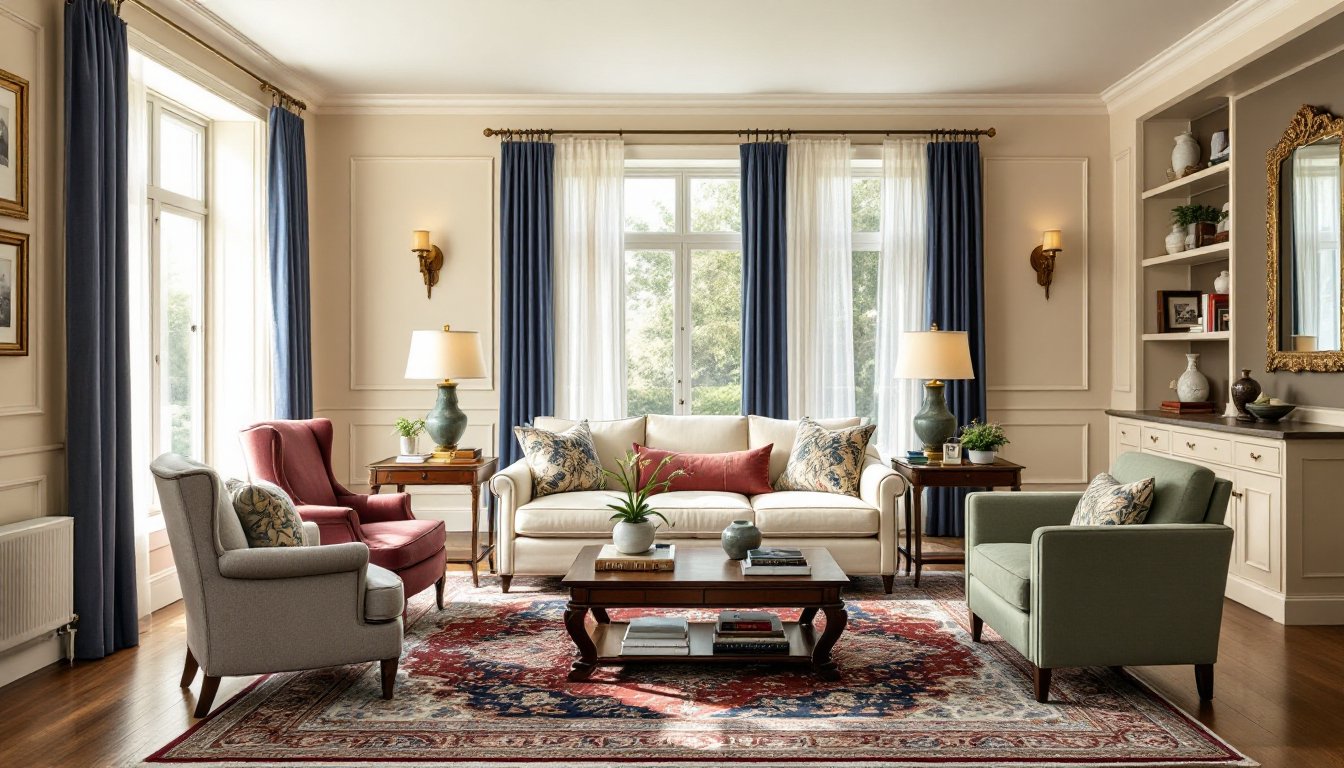
A traditional living room balances formality with livability. You’ll see this in architectural elements like crown molding, wainscoting, and built-in bookshelves. Furniture often features turned legs, rolled arms, and tufting. Colors tend toward warm neutrals, creams, taupes, soft grays, accented with jewel tones or deep navy.
The key difference from contemporary design is intentionality. Everything You Need To Know About Traditional Design explains that traditional spaces rely on curated collections rather than minimalism, with room to display meaningful objects without clutter. Quality matters more than novelty: a solid wood sofa outlasts trend-chasing upholstery by decades.
Selecting Furniture and Upholstery
Choosing the right furniture sets the tone for your entire traditional living room. Look for pieces with substantial frames, hardwood (oak, cherry, or maple) won’t bow or creak after a few years like particleboard will. Upholstery fabrics matter too: linen, wool, and high-quality cotton blends resist wear better than cheap synthetics and actually age gracefully.
Essential Furniture Pieces
Start with a sofa as your anchor, typically 84 to 96 inches long, with rolled or lawson arms. Pair it with accent chairs: wingbacks or club chairs flank a side table holding a brass or ceramic lamp. A coffee table in wood or stone (32 to 48 inches wide, depending on your room) sits centered on an area rug.
Add two or three occasional tables: nesting tables, pedestal tables, or console tables for lamps, books, or decor. Design House Decor: Transform emphasizes that layering functional pieces creates depth. A bookcase or entertainment unit anchors one wall: traditional designs feature adjustable shelves and closed storage below to hide clutter while displaying ceramics, books, and framed photos.
Upholstery color works best in neutrals (cream, camel, gray, or navy) so you can shift accents with pillows and throws. Invest in quality construction: eight-way hand-tied springs, kiln-dried hardwood frames, and down-wrapped cushions feel solid and last longer than budget alternatives.
Color Palettes and Wall Treatments
Traditional color schemes feel warm and grounded. A classic palette pairs a soft neutral like warm white, cream, or greige (gray-beige) on walls with deeper accent colors, forest green, burgundy, or navy blue, in upholstery, art, and trim.
Consider wall treatments beyond paint. Wainscoting, the lower three feet of a wall paneled with beadboard or raised-panel wood, adds architectural interest and is surprisingly DIY-friendly if you’re comfortable with basic carpentry. Crown molding at the ceiling line, typically 3 to 5 inches deep, frames the room and catches light beautifully. Both require finish nails, a nail gun or hammer, and paintable caulk at seams.
For paint, use quality eggshell or satin finishes (matte shows dust and handprints). Traditional rooms benefit from undertones that feel lived-in: warm whites have hints of yellow or beige rather than stark coolness. Southern Living often showcases soft, regional palettes that favor warmth and comfort. Add texture with a faux finish, striae, or subtle wallpaper (damasks and florals in muted tones work beautifully) on a single accent wall or behind built-ins. Always prep walls thoroughly: sand, fill imperfections, and prime before painting, poor prep shows in traditional spaces where light and proportions matter.
Layering Lighting and Accessories
Lighting separates a dull room from a refined one. Traditional spaces need three layers: ambient (overhead or installed ceiling fixtures), task (reading lamps, wall sconces), and accent (uplighting on art or architectural details).
Lighting Fixtures and Placement
Chandeliers or flush mounts in brass, bronze, or oil-rubbed finishes work as ambient sources. Avoid overly modern LED fixtures: look for fixtures with fabric shades or crystals that soften light. Table lamps on side tables should have fabric shades in cream or linen, they warm the room and reduce harsh glare. Wall sconces flanking a mirror or above side tables add elegance and functional light for reading.
Wall sconces should mount 60 to 66 inches from the floor (center of the fixture) for balanced lighting. Aim for dimmers on overhead lights so you can adjust ambiance from bright to intimate.
Accessories tie the room together. Layer in throw pillows (mix solids with damask or toile prints), a few artfully stacked books, framed botanical prints or family photos, and brass or ceramic vessels. A traditional area rug (think Persian, Turkish, or reproduction styles) anchors furniture and defines the seating zone. Rug on Carpet Living shows how a rug adds color and texture without overcomplicating the space. Keep accessories curated but not sparse, a gallery wall of framed family photos feels more traditional than blank walls, while a single large mirror opposite a window bounces light and creates depth.
Flooring and Window Treatments
Traditional living rooms work best with hardwood flooring, oak, cherry, or walnut in medium to dark stains. If you’re installing new flooring, allow it to acclimate to your home’s humidity for 48 hours before laying. Prefinished hardwood minimizes on-site sanding: site-finished hardwood offers more stain choices but requires longer dust containment and curing time (typically 5 to 7 days before furniture returns).
Area rugs anchor the room and soften acoustics. Choose natural fibers, wool, jute, or silk, in traditional patterns. An 8×10 or 9×12 rug typically defines a living room seating area, with front legs of sofas and chairs sitting on the rug’s edge.
Windows need layered treatments: sheer curtains or sheers on a rod inside the window frame allow privacy while admitting diffused light, topped with heavier drapes in linen, velvet, or damask mounted on brass or wood rods. Drapes should reach the floor (or pool slightly, 1 to 2 inches, for elegance). MyDomaine offers detailed guides on measuring and hanging drapes correctly, accurate measurements prevent the amateurish look of undersized or crooked panels. Install rods 6 to 12 inches above the window trim to create height and visual proportion. Avoid sheer polyester (it yellows and frays): linen or cotton blends age gracefully and maintain their drape.